When 74% of CEOs and senior leaders say they believe their managers are very confident handling difficult people conversations independently, they are measuring their own comfort. The July 2026 Predictive Index (PI) AI and People Leadership Report found that belief alongside a different signal from managers themselves: they want more structure, scripts, and guidance for exactly these conversations. Those include AI-driven role changes, redeployment, and performance shifts. The distance between those two data points is where retention risk sits.
Confidence at the top is not readiness at the point of contact
Executives see AI through strategy, cost, and capability. Employees experience it through their own job. The RSM Middle Market AI Survey 2026 found that 85% of respondents say executive leadership is more enthusiastic about AI than employees are. That is not a communication failure that a better town hall will fix. It is a structural difference in what each group stands to gain or lose.
The only person positioned to bridge that difference is the direct manager. They translate a decision made three levels up into a conversation with a person who is deciding whether to stay. If that manager lacks structure, the translation fails in predictable ways. Messages arrive inconsistent, vague, or late. Employees fill the gaps with the worst available interpretation.
The retention implications are direct
Every AI-driven change creates a moment of employment decision for the person affected, whether or not they say so. A role that shifts, a team that is restructured, a performance standard that is rewritten: each prompts the same private question, which is whether this organization is still a place where they want to build their career. The manager’s conversation is usually the deciding input.
This is why the confidence gap should be treated as a retention exposure and not a training nicety. An organization can invest heavily in AI tools and still lose the people who make those tools valuable, because the human conversation around the change was improvised. I made a related argument in why trust is not flowing to the leaders who sound most certain about AI: certainty projected from above does not substitute for honesty delivered at the point of contact.
What change management usually misses
Most change plans cover communications calendars, FAQs, and executive messaging. They treat the manager conversation as an execution detail. In practice it is the delivery mechanism for the entire change. Three gaps appear repeatedly.
- Sequencing. Managers learn about a change at the same time as their teams, or after. They are expected to respond to questions they have not had time to think about.
- Decision rights. Managers are not told what they can promise, what they cannot, and who to escalate to. So they either overpromise or say nothing.
- Preparation. No one has practiced the conversation. The first live attempt is with the affected employee.
Each of these is fixable, and none requires a large budget. They require deciding that the manager conversation is part of the change itself.
What to fund
If you are allocating resources against this gap, I would put money in four places, in this order.
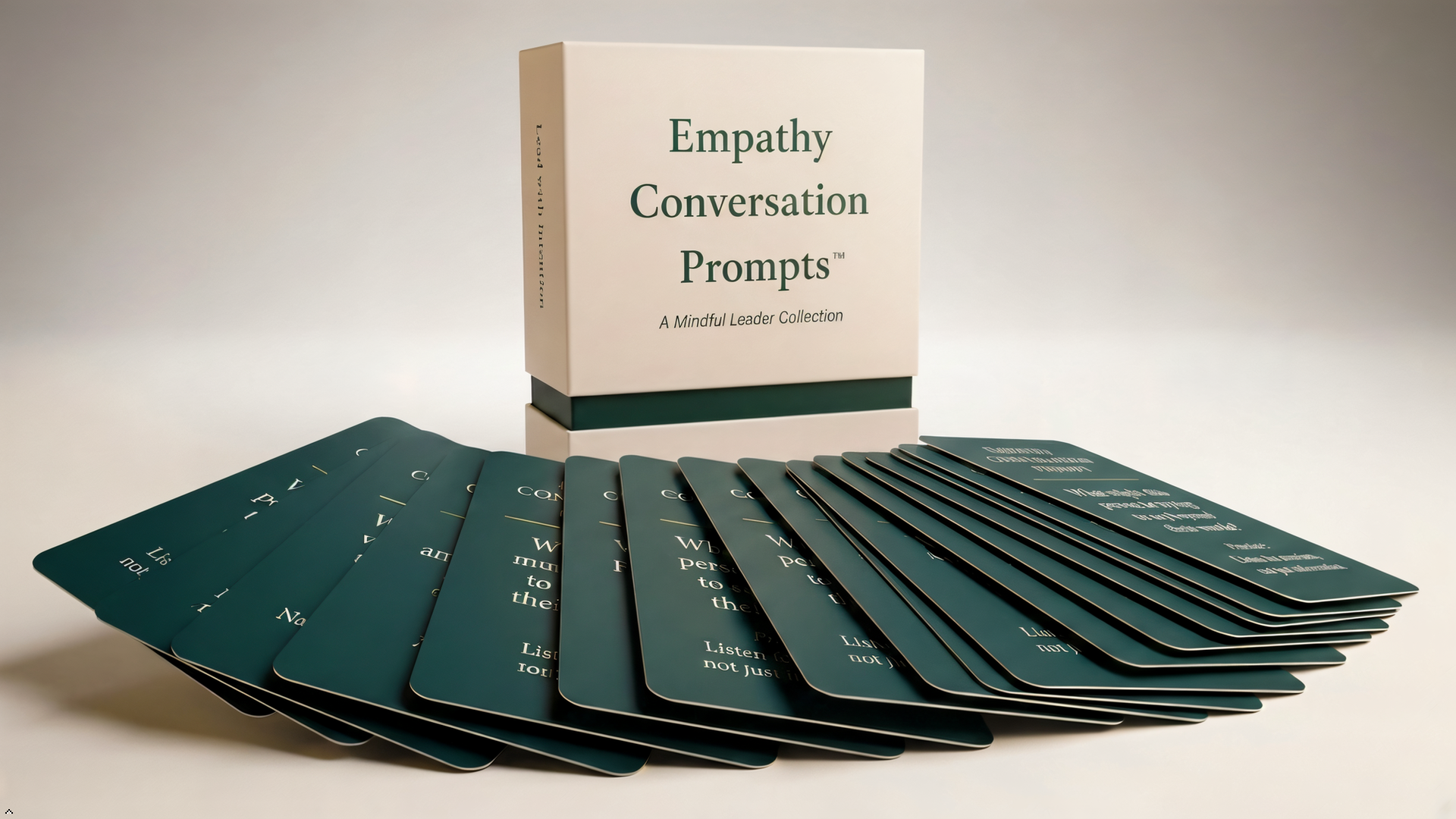
- Conversation structure for the three high-stakes scenarios. Role change, redeployment, and performance shift. Give managers a defined shape for each: what is decided, what is open, what the next step is, and who owns it. Managers asked for structure. Provide it.
- Manager briefing before announcement. Build a standing practice that managers receive decisions, rationale, and permitted language before their teams do. Even a short window changes the quality of the first conversation.
- Facilitated practice. Run small-group sessions where managers rehearse the hard conversations with one another and with a facilitator. Rehearsal is what converts a script into a skill. A document alone will not.
- A feedback loop upward. Create a simple channel for managers to report what employees are asking and where the guidance fell short. This corrects the executive picture that the PI findings reveal, and it turns managers into a source of intelligence about how the change is landing.
Notice what is not on the list: another AI tool training, another all-hands, another general leadership workshop. Those have value, but they do not address the specific gap. This one is about a conversation.
Measure readiness where it shows up
Do not ask managers whether they feel confident. Executives already believe they are, and self-reported confidence is the measure that created the gap. Look instead at behavior and outcomes. Are the hard conversations happening, and how quickly after a decision? Are employees reporting that they understood what changed? What are regretted departures among people in affected roles? These measures tell you whether preparation is real. They connect directly to the argument in AI investment is outpacing leadership readiness, where the question is not how much is being spent but whether the people carrying the change are equipped.
The decision in front of leadership teams
Closing this gap does not require doubting your managers. It requires believing what they are telling you. When they ask for structure, scripts, and guidance, that is a precise statement of what the work needs. Treat it as a design input.
The organizations that handle AI-driven change well will not be the ones with the most confident executives. They will be the ones where a manager can sit across from an employee, say what is known and unknown, and leave the person more clear than they arrived. Fund that capability deliberately, before the next restructure forces the conversation. After a few cycles of AI-driven change, the manager who was prepared is the reason people stayed.
The question for your next budget review is a simple one. If your managers have the confidence you believe they do, what is the evidence? And if the evidence is thin, which of the four investments above can you start before the next announcement?